Concrete That Carries Load for Decades
Foundation & Structural Concrete Services in Lawrenceville for properties requiring load-bearing systems that prevent settlement and structural failure
Master Invert Builders provides foundation and structural concrete services throughout Lawrenceville, addressing both new construction requirements and existing foundation problems that threaten structural integrity. If you're seeing cracks in walls, sticking doors, or uneven floors, the concrete foundation supporting your property may have shifted or degraded beyond its original load-bearing capacity. Structural concrete work differs from decorative applications because it must meet specific compressive strength requirements and reinforcement standards to support building weight over time.
Foundation repair involves identifying why the original concrete failed—whether from soil movement, water infiltration, insufficient curing time, or inadequate rebar placement—and implementing corrections that address the root cause rather than surface symptoms. House slabs and commercial building foundations require different approaches based on the load they carry and the soil conditions beneath them, with Georgia's expansive clay soils creating unique challenges as moisture content changes between wet and dry seasons.
Schedule a structural assessment to determine whether your foundation requires repair or replacement based on current load conditions.
What Proper Structural Concrete Requires
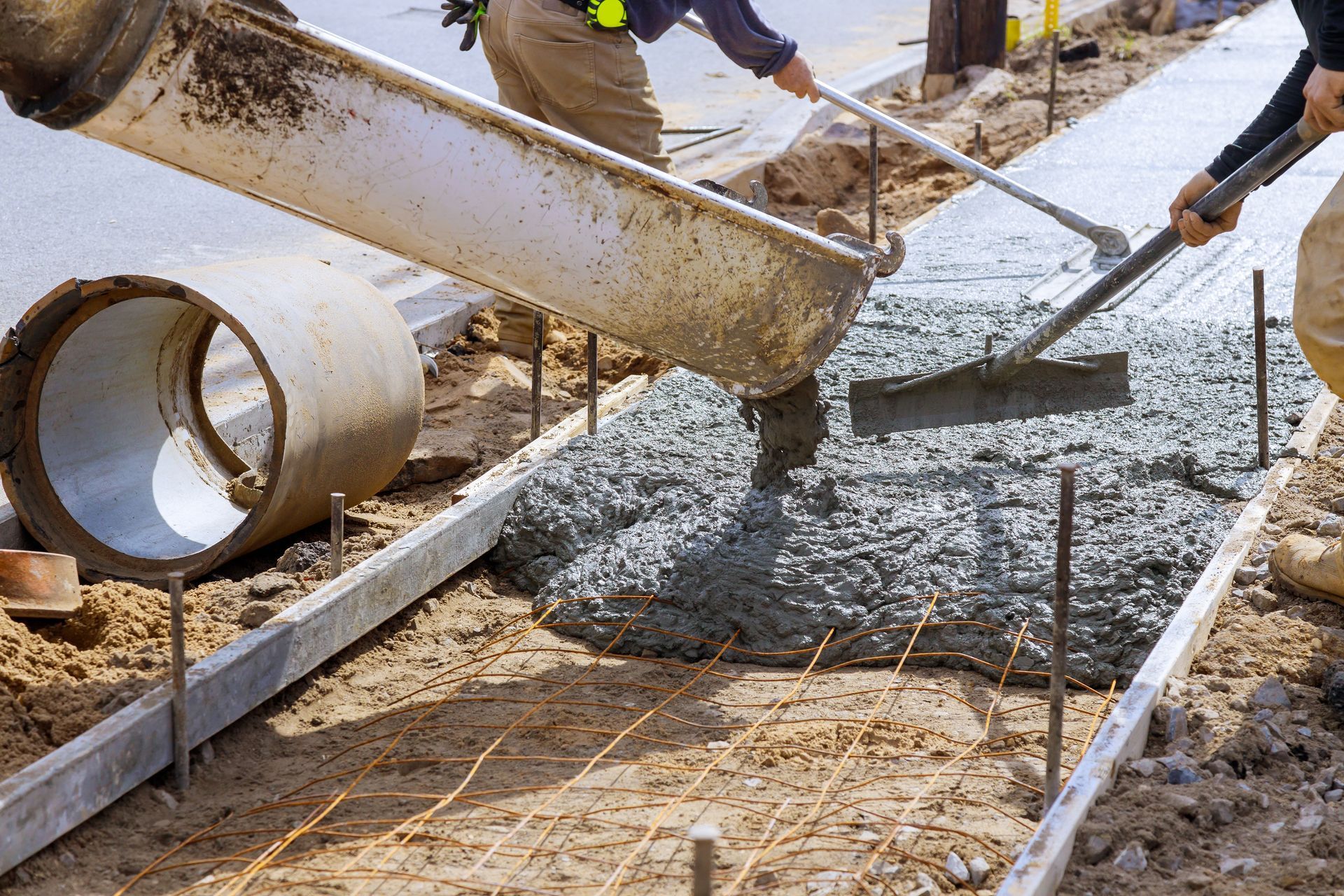
Structural concrete work begins with soil analysis and compaction testing to confirm the ground can support the planned load without settling. The concrete mix itself must meet specific compressive strength ratings—typically 3,000 to 4,000 psi for residential foundations and higher for commercial applications—with proper water-to-cement ratios and curing conditions maintained throughout the hardening process. Reinforcement placement matters as much as the concrete itself, since rebar positioning determines how tensile forces distribute when the structure experiences loading or ground movement.
Once the foundation cures completely, you'll notice floors remain level under furniture weight, doors operate smoothly without binding, and wall cracks stop progressing as the structure sits on stable support. Foundation repair work becomes visible through elimination of previous symptoms—gaps between walls and ceilings close, sloping floors return toward level, and moisture intrusion through foundation cracks stops as sealed concrete prevents water migration.
Commercial building foundations involve additional considerations including column footing depths, seismic requirements where applicable, and coordination with other trades for utility penetrations that must be cast into the concrete before pouring. The thickness and reinforcement schedule varies based on engineering specifications, with heavier structures requiring deeper footings and more substantial rebar grids to distribute load across larger soil contact areas.
What Property Owners Usually Ask
Questions about foundation and structural concrete work typically focus on timing, repair methods, and how to distinguish between minor cracks and serious structural concerns.
What causes foundation cracks to appear years after construction?
Foundations crack when soil beneath them expands or contracts due to moisture changes, creating uneven support that exceeds the concrete's tensile strength. Lawrenceville's clay-heavy soils absorb water during wet periods and shrink during drought, generating movement that older foundations without adequate reinforcement cannot accommodate without cracking.
How does foundation repair differ from pouring a new foundation?
Repair work stabilizes existing concrete through methods like slab jacking to lift settled sections, epoxy injection to seal structural cracks, or underpinning with helical piers that extend support to deeper, more stable soil layers. New foundations involve complete excavation, formwork, and pouring to current building codes with modern reinforcement standards.
When should you replace a foundation instead of repairing it?
Replacement becomes necessary when more than thirty percent of the foundation shows structural damage, when the original concrete has deteriorated to the point where it cannot bond with repair materials, or when the building load has increased beyond what the existing foundation was designed to support.
What determines the curing time required before a foundation can bear load?
Concrete reaches about seventy percent of its design strength within seven days under proper conditions, but full load-bearing capacity requires twenty-eight days of curing as chemical hydration continues. Temperature and humidity affect this timeline—hot, dry conditions in Georgia summers can require additional water application to prevent premature surface drying that weakens the final structure.
How do you identify whether foundation movement has stopped or will continue?
Movement monitoring involves installing reference points and measuring them over several months across different seasons to determine whether cracks are actively widening or have stabilized. Active movement requires intervention to address the underlying cause, while stable cracks may only need sealing to prevent water intrusion.
Master Invert Builders evaluates both visible symptoms and underlying soil conditions to recommend foundation solutions matched to your property's specific structural requirements. Request an on-site foundation inspection to determine the extent of needed repairs and the approach that provides long-term stability.