Surfaces That Handle Daily Vehicle Traffic
Concrete Driveways & Walkways in Lawrenceville for properties replacing worn surfaces or adding new access routes
Cracked driveways with uneven sections and walkways that collect water signal the need for replacement, not just patching. Master Invert Builders installs concrete driveways and walkways designed to support vehicle weight and foot traffic while directing water away from foundations and entryways. Properties in Lawrenceville often require driveway extensions or new pathways that connect to existing concrete, and the installation process accounts for matching elevations and creating smooth transitions.
Driveway installation involves excavating the existing surface if present, compacting the base to prevent settling, and pouring concrete thick enough to support daily vehicle use without cracking under load. Walkways follow a similar process but typically use a thinner slab since they don't carry the same weight. Both require control joints placed at intervals that manage how the concrete expands and contracts with temperature changes, keeping cracks confined to planned locations.
Arrange an on-site consultation to review your existing driveway condition and discuss options for extensions or full replacement.
Why Proper Base Work Matters for Driveways
The longevity of any driveway depends on the base layer beneath the concrete, which must be compacted to a density that prevents movement when vehicles pass over it repeatedly. If the base settles unevenly, the concrete above will crack along stress points, and sections will sink or tilt. The grading of the base also determines how water drains—surfaces that slope toward the street or yard edges stay dry, while those that trap water experience faster deterioration from freeze-thaw cycles during winter months.
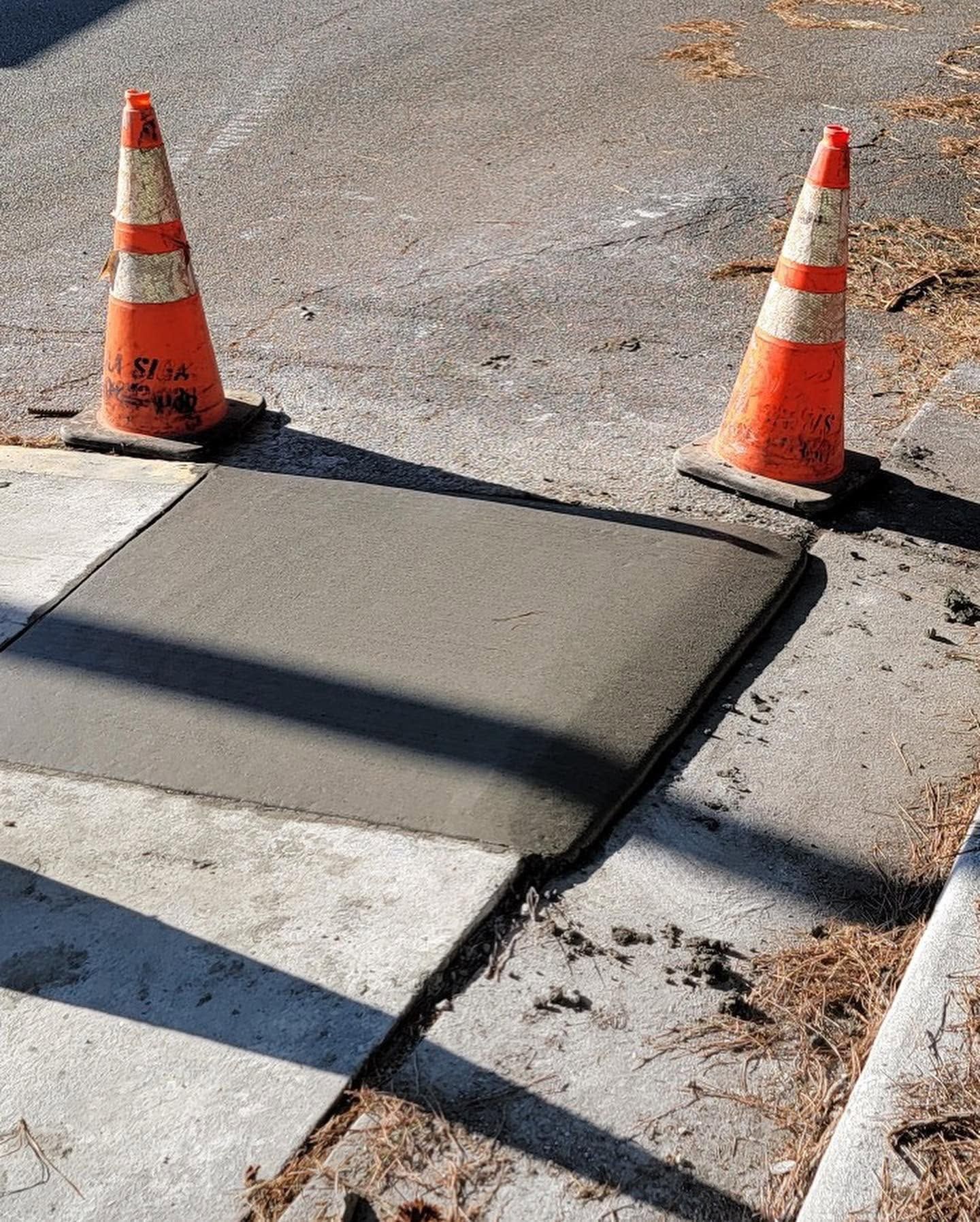
After installation, your driveway will have a smooth, level surface with consistent slope away from the garage or house. You'll notice that rainwater runs off instead of pooling, and the surface remains stable when you park or turn vehicles without rocking or settling. Properly placed control joints create straight lines across the driveway, and the concrete cures to a uniform color without surface scaling or dusting.
Driveway projects also include forming edges where the concrete meets landscaping, curbs, or existing pavement. Residential driveways typically use six-inch-thick concrete with wire mesh reinforcement, while commercial entrances with heavier traffic may require additional thickness and rebar. The finishing process creates a slightly textured surface that provides traction in wet conditions without being rough enough to cause discomfort for barefoot use on adjacent walkways.
Common Questions About This Service
Driveway and walkway projects involve decisions about width, thickness, and surface finish, and understanding these factors helps you plan a surface that meets your property's needs.
How wide should a residential driveway be?
Single-car driveways typically measure 10 to 12 feet wide, while two-car driveways require at least 20 feet to allow vehicles to park side by side. If the driveway includes a turn or curve, additional width prevents vehicles from driving off the edge onto the lawn or landscaping.
What causes driveways to crack over time?
Most cracks result from base settlement, inadequate thickness for the load, or missing control joints that would otherwise direct cracks to planned locations. Tree roots growing beneath the slab can also lift sections, and freeze-thaw cycles expand small surface cracks into larger structural problems if water infiltrates the base.
How long before you can drive on a new driveway?
Concrete reaches sufficient strength for light foot traffic within 24 to 48 hours, but you should wait at least seven days before driving on it. Heavy vehicles or turning movements should be avoided for two weeks to prevent surface damage while the concrete continues to cure and harden.
What's the difference between a driveway and a walkway installation?
Driveways require thicker concrete—typically six inches versus four inches for walkways—because they must support vehicle weight without cracking. The base preparation is also more intensive for driveways, with deeper excavation and more compaction to handle repeated loading from cars and trucks.
Can new concrete be matched to existing sections in Lawrenceville?
New concrete will initially appear lighter than older, weathered sections, but it will darken and blend over several months of exposure to sun and rain. If color matching is critical, integral color or surface stains can be added during installation to reduce the contrast between new and existing concrete.
Master Invert Builders installs driveways and walkways for residential and commercial properties throughout Lawrenceville, with specifications tailored to your site's traffic patterns and drainage requirements. Request a site visit to discuss layout options and review how the new surface will connect to existing structures.